THE SHORT ANSWER
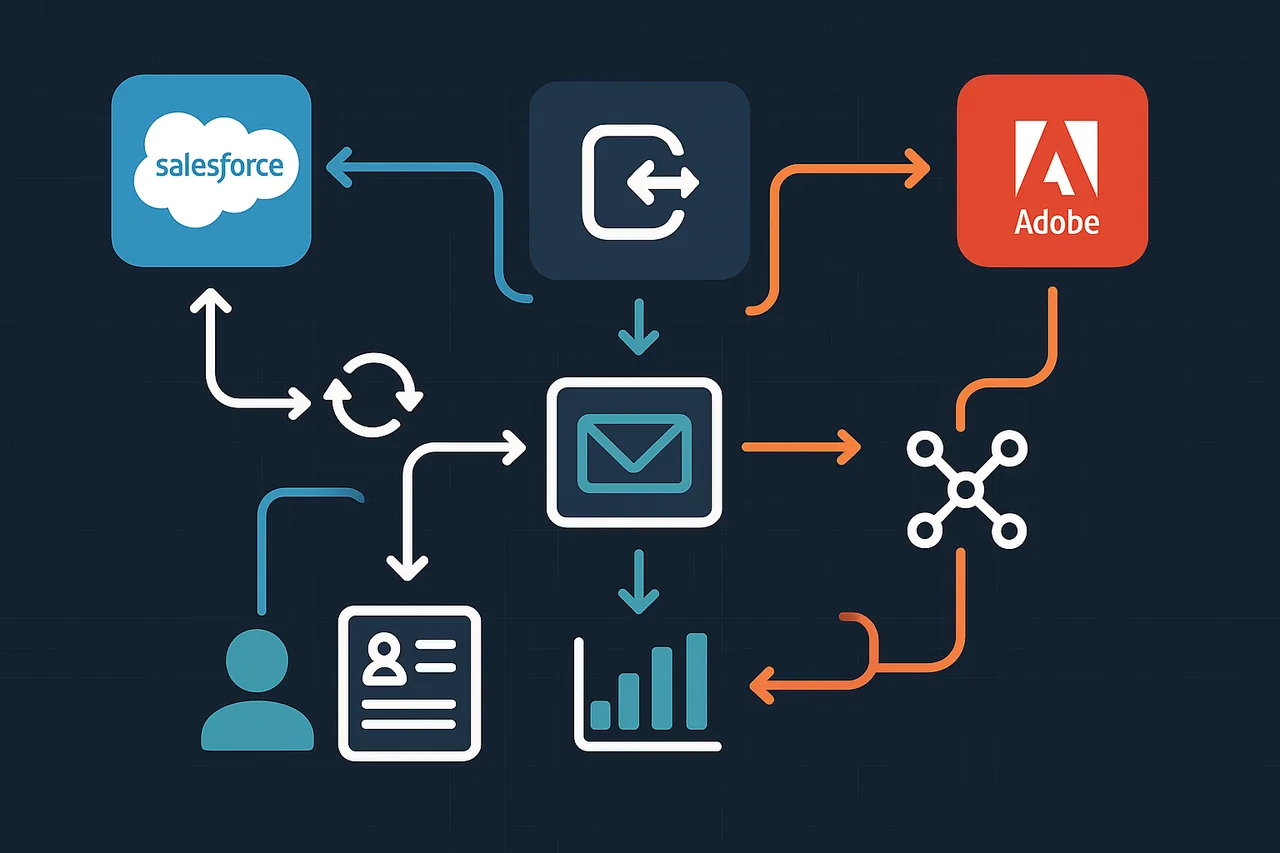
An AEM–Eloqua integration connects a managed website experience to marketing records and workflows. A useful plan defines what the visitor does, which data is captured, how Eloqua processes it, and how qualification or sales follow-up uses the result.
Embedding a form is a visible step in the work. The surrounding requirements include authoring, field ownership, source context, validation, processing, analytics, and the point at which another team or system acts on the record.
Describe the experience and authoring requirements
Identify the pages, audiences, languages, and content teams involved. Decide which fields and messages authors may change and which parts of the component must remain consistent. Reusable AEM components help make that boundary manageable.
The interaction design should include validation, submission progress, accepted and failed states, keyboard behavior, and the next step for the visitor. A form that looks complete but cannot confirm acceptance creates both experience and measurement problems.
Define the field and identity contract
List visible fields, hidden fields, campaign context, source identifiers, and any agreed preference information. Map the destination fields and define which source is authoritative when the same person already exists in a system.
Progressive profiling and prepopulation need rules appropriate to the implementation. Test the experience for first-time and returning visitors, missing context, repeated submissions, and the supported browser or embedded-form configuration.
Plan Eloqua processing and related data
Determine which processing steps validate, enrich, route, or enroll the record. Campaign and program canvases should use an agreed lifecycle rather than infer intent from a single form field without context.
Custom Data Objects may be appropriate when a related product, contract, equipment record, or event interaction needs to inform segmentation. Define the relationship and update behavior before using that data in scoring, dynamic content, or campaign decisions.
Specify the CRM handoff
Qualification, scoring, required fields, account matching, and routing rules determine whether sales receives a usable lead. An integration should identify when the handoff happens, which system owns the status, and how a receiving error is reviewed.
Our published iCapture, Eloqua, and Salesforce work illustrates the importance of connecting capture, processing, nurture, and routing. The exact pattern for another client follows its data model, access, and operating requirements.
Validate analytics and operational acceptance
Check the browser interaction, receiving record, processing outcome, intended campaign behavior, and analytics event. Each step supplies different evidence. A successful HTTP request is not by itself proof of a correct lead or campaign enrollment.
The acceptance plan should include ordinary submissions, invalid inputs, duplicates, missing campaign context, and downstream failures. Document source and report definitions so implementation testing and later performance reporting use compatible language.
Leave an operating model behind
Assign component ownership, marketing operations ownership, CRM responsibility, and reporting support. Record the dependencies that change when a form, field, campaign, or source system is updated.
Documentation and training should let the client team maintain the connected journey. The project is easier to sustain when an author, marketer, analyst, and engineer can each understand their part of the handoff.
What an engagement can deliver
- Journey and component brief
- Visitor behavior, authoring needs, and interface states.
- Data and lifecycle specification
- Field mapping, identities, processing, and qualification.
- Acceptance plan
- Evidence from browser interaction through downstream handling.
- Ownership and training
- Dependencies, responsibilities, and ongoing maintenance.
Questions & answers
Should AEM or Eloqua own every field?
Field ownership depends on the business process and the source of truth. The contract should identify which system may create or change each value.
When should we use an Eloqua CDO?
Consider a CDO when related records need to enrich contact or account context for segmentation, campaigns, personalization, or reporting. The relationship and maintenance rules matter as much as the field list.
What should count as a successful integration test?
A test should demonstrate the agreed visitor experience, receiving record, processing behavior, downstream handoff, and measurement. Acceptance is based on that chain, not solely the appearance of the form.